
2026 Guide
USCIS is denying cases. Don't be next.
Over the past few months, Pinho Law has seen a sharp rise in Adjustment of Status denials. Immigration has gotten smarter — and more aggressive. If you're in the US right now, two mistakes can kill your case before it begins. This guide shows you how to avoid them.

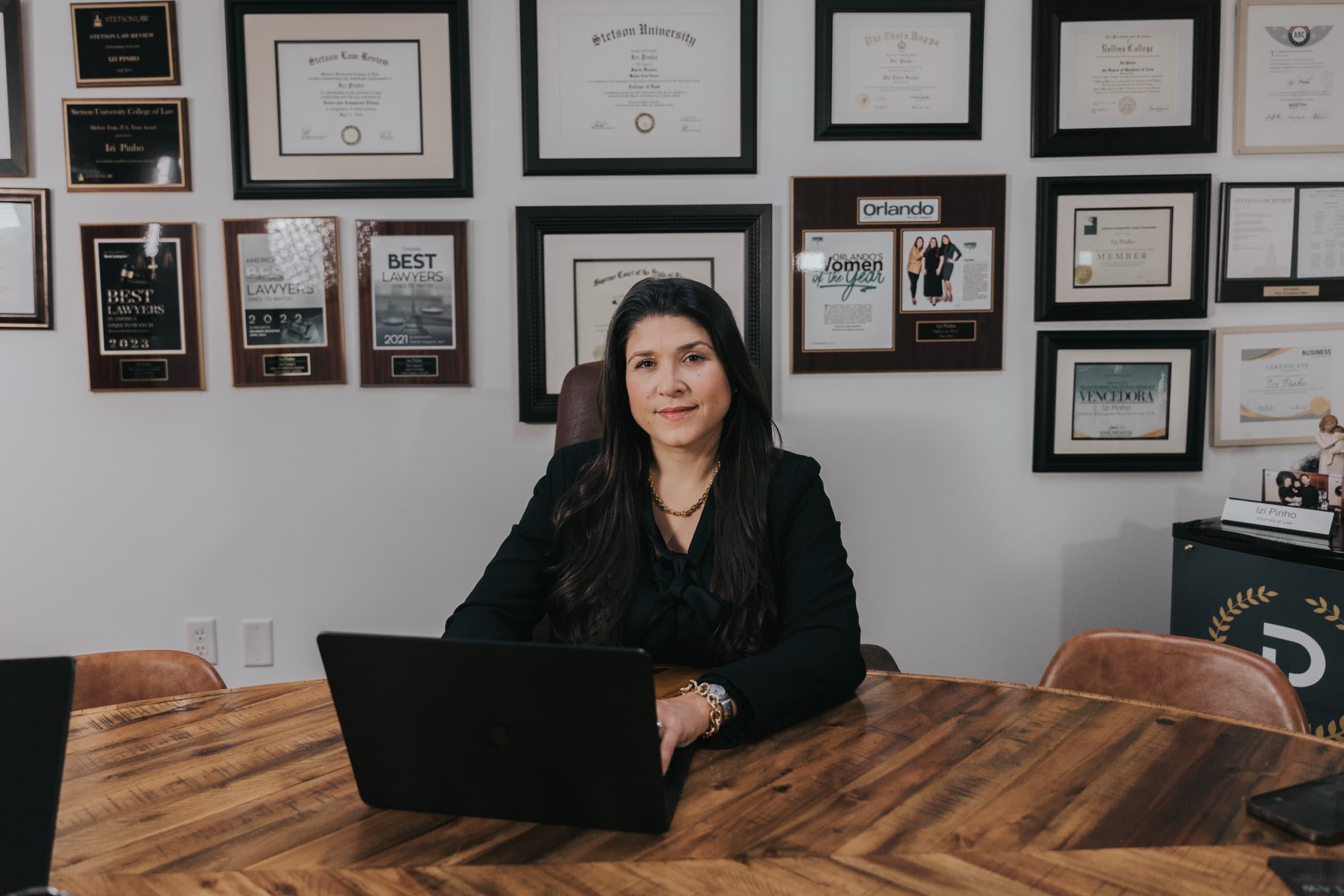
Dra. Izi Pinho, Esq.
Florida Bar
What you stand to lose
Your current status
Applying for a status change without protection can trigger a denial that invalidates both the new case AND the status you held before.
Years of investment
EB-2, EB-3, EB-5 take 2-5 years. A paperwork mistake at the start costs all that time.
Your US family
Spouse and derivative children depend on the principal case. If yours falls, theirs falls with it.
Parte 1
Part 1 — Keep your status (before you apply)
If you're already in the US and planning to file for EB-1, EB-2, EB-3 or any other case, your first priority is NOT the new petition. It's maintaining the status you have today.
- USCIS is denying change-of-status requests when there are improperly-structured pending cases — what used to be flexible sequencing is now risky.
- Under the current administration, more than ever, your immigration strategy must make sense in the ORDER the petitions are filed.
- Working with an attorney experienced in immigration isn't a luxury — it's what separates an approved case from one denied on a technical question.
Parte 2
Part 2 — Did you enter on tourism? Save everything.
If you entered the US on a B-1/B-2 tourist visa and want to adjust status, you need to PROVE the tourism was real. Immigration is actively investigating — and demanding evidence.
“Dra. Izi has seen Requests for Evidence (RFE) and Notices of Intent to Deny (NOID) on cases that seemed routine. Four to five months of tourism is a lot of time — and USCIS wants to see what you did during it.”
Checklist of evidence you should preserve
Photos with date and location
Parks, museums, restaurants, cities you visited. Ideally with GPS metadata preserved (don't screenshot — keep the originals).
Receipts and proofs
Hotels, Airbnbs, restaurants, theme parks, malls, transport (Uber, car rentals). Print or save as PDF.
Documented itinerary
Where you stayed, where you went, when you returned. Google Calendar or contemporary notes work — provided they're contemporary, not created after the fact.
Ties to your home country
Proof you intended to return: property in your home country, employment, family, active bank account, ongoing contracts.
Processo
How the process works (step by step)
From the petition to green card approval. Each Adjustment of Status stage has its own deadline, form, and documents — and each stage requires preparation. Here's the full path, from filing day to permanent residence:
1. Form I-485 + base petition
The Adjustment of Status application (Form I-485, Application to Register Permanent Residence) is the central form. The base petition (I-130 for family, I-140 for employment) accompanies it, along with all evidence: certificates, declarations, proofs, photographs, personal information. Pinho Law reviews every document before submission.
2. Biometrics at the ASC (Application Support Center)
Approximately 4 to 8 weeks after filing, USCIS schedules fingerprinting at the nearest Application Support Center (ASC). Attending on the assigned date is mandatory — missing the biometrics appointment delays the entire case, and rescheduling can take months.
3. EAD and Advance Parole (during processing)
You can apply simultaneously for the work permit (Employment Authorization Document, EAD) and travel permit (Advance Parole). These documents allow you to work legally in the United States and travel while the I-485 is still in processing — average wait is 8 to 18 months.
4. Interview and final decision
USCIS may schedule an interview at the local field office — the officer asks questions about your history, your work, your family, your ties to the United States. After the interview (or directly, if waived), the officer issues the decision: approval, RFE requesting more evidence, or denial. Approval means the green card, permanent residence, and an open path to US citizenship in the future.
Dra. Izi's three golden rules
1. Never try to outsmart USCIS
Trying to outsmart USCIS is the single most common strategy of people who lose their cases. They have database access, social media, entry/exit records. If the story doesn't add up, the case falls.
2. ORDER matters more than the petition itself
Tourist → student → worker → green card, in correct sequence, protects your status. Skipping steps is what triggers denials.
3. Document from day one
People who wait for an RFE to start collecting evidence have already lost. Start saving everything the day you land in the US — even if you don't yet know you'll apply.
Next steps
Every case is different. Before filing anything, message the team on WhatsApp — Sofia runs an initial triage and connects you with Dra. Izi. The consultation has a clear fee, disclosed up front.
Don't risk your case
Message the team before filing. Sofia triages on WhatsApp and connects you with Dra. Izi — you walk away with clarity on what to do.
(407) 385-4144 · Pinho Law PLLC · Florida Bar
Frequently asked questions
Can I apply for Adjustment of Status (AoS) if I entered on tourism?▾
Yes, it's legal — provided the tourism was genuine. If your intent on entry was to stay permanently, that's visa fraud and can result in denial plus future bar.
How long after entering on tourism can I apply for AoS?▾
USCIS has an unofficial 90-day rule — applying for a status change within the first 90 days of entry creates a presumption of "fraudulent misrepresentation." Dra. Izi evaluates timing case by case.
I've already received an RFE — have I lost the case?▾
Not necessarily. An RFE is a chance to respond with more evidence. But the time window is short (typically 87 days) and the response must be technical. Don't reply alone.
Can I file EB-2 NIW while on tourism?▾
EB-2 NIW can be filed from any country, but the Adjustment of Status (I-485) only works if you're inside the US IN VALID STATUS at the time. That's why filing order is critical.
Is it worth having an attorney even on simple cases?▾
"Simple" cases are the ones that most surprise people under this administration. Pinho Law has seen straightforward cases denied over details that seemed trivial. WhatsApp triage is quick and helps determine whether a paid consultation makes sense for your situation.
How much does the consultation cost?▾
The initial WhatsApp triage is free of charge. The consultation with the Pinho Law team has a clear fee disclosed up front; case fees are set afterward, based on complexity — no surprises.
Ready to take the next step?
Schedule a consultation today. We will listen, assess your situation, and give you a clear path forward — in the language you are most comfortable with.